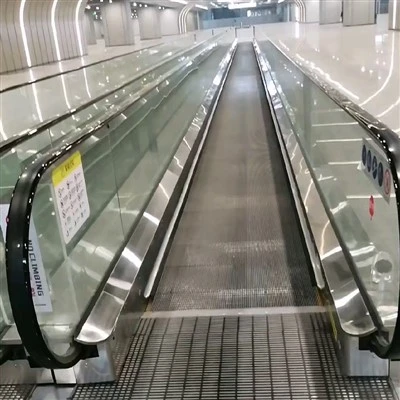
When it comes to the infrastructure of modern transportation hubs, commercial complexes, and large public buildings, moving walkways play a crucial role in enhancing the efficiency of pedestrian flow. As a supplier of moving walkways, I often encounter questions from clients regarding various aspects of these systems, one of the most common being, "What is the width of a typical moving walkway?"
Standard Widths in the Industry
The width of a moving walkway is not a one - size - fits - all measurement. It is designed to meet different usage requirements and environmental constraints. In general, the standard widths of moving walkways can be classified into several categories.
The narrowest moving walkways usually have a width of around 600 mm (23.6 inches). These are often used in areas where space is limited, such as small subway stations or corridors with restricted dimensions. For example, in some older subway stations that were built with limited space, a 600 - mm wide moving walkway can still effectively increase the speed of pedestrian movement without taking up too much room.
A more common width is 800 mm (31.5 inches). This width is suitable for a wide range of applications, including medium - sized shopping malls, airports, and train stations. It can accommodate a relatively large number of pedestrians walking side by side or carrying small luggage. In an airport, an 800 - mm wide moving walkway can help passengers quickly reach their gates, especially during peak travel times.
The wider moving walkways typically have a width of 1000 mm (39.4 inches) or more. These are often installed in large - scale transportation hubs, such as major international airports or large railway stations. A 1000 - mm wide moving walkway can easily handle high - volume pedestrian traffic, allowing people to walk comfortably while carrying large suitcases or bulky items. For instance, at a busy international airport, the wide moving walkways can significantly reduce the time it takes for passengers to move between different terminals.
Factors Influencing the Width Selection
Several factors need to be considered when determining the appropriate width of a moving walkway.
Pedestrian Volume
The expected number of pedestrians using the moving walkway is a primary factor. In high - traffic areas, such as the main concourses of large airports or the central corridors of busy shopping malls, wider moving walkways are required to prevent overcrowding. For example, during the holiday season at an airport, the pedestrian volume can increase significantly. A wider moving walkway can ensure that passengers can move smoothly without congestion.
Space Availability
The physical space where the moving walkway will be installed also plays a crucial role. In some buildings, the available space may be limited due to architectural constraints or pre - existing structures. In such cases, a narrower moving walkway may be the only option. For example, in an old building undergoing renovation, the narrow corridors may only allow for a 600 - mm wide moving walkway.
Function and Usage
The intended function of the moving walkway also affects the width selection. If the moving walkway is mainly used for transporting people with luggage, such as in an airport or a train station, a wider width is necessary to accommodate the additional space required for luggage. On the other hand, if it is used in a building where people are mainly walking without carrying large items, a narrower width may be sufficient.
Our Product Offerings
As a moving walkway supplier, we offer a wide range of moving walkways with different widths to meet the diverse needs of our clients. Our Flat Moving Escalator comes in various widths, including 600 mm, 800 mm, and 1000 mm. This type of moving walkway is ideal for flat areas in buildings, providing a smooth and efficient way for pedestrians to move.
Our Moving Walk Escalator is another popular option. It combines the features of a moving walkway and an escalator, offering a unique solution for different applications. We can customize the width of this product according to the specific requirements of the project.
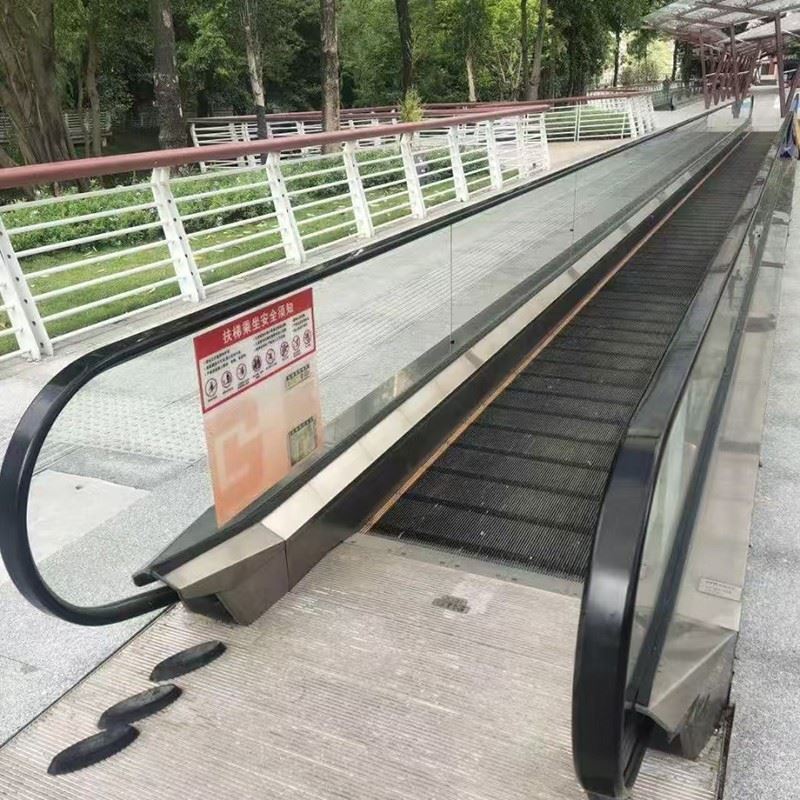
In addition, our Moveable Walkway is designed to be flexible and adaptable. It can be installed in various locations and is available in different widths to suit different installation environments.

The Importance of Correct Width Selection
Selecting the correct width of a moving walkway is not only important for the efficient operation of the system but also for the safety and comfort of the users. A too - narrow moving walkway can lead to overcrowding, which may increase the risk of accidents. On the other hand, a too - wide moving walkway may be a waste of space and resources.
For example, in a subway station, if the moving walkway is too narrow, passengers may be forced to walk on the sides of the walkway, which can cause congestion and potential tripping hazards. In contrast, if it is too wide, it may take up valuable space that could be used for other purposes, such as additional seating or retail areas.
Contact Us for Your Moving Walkway Needs
If you are planning to install a moving walkway in your building or facility, it is essential to choose the right width based on your specific requirements. Our team of experts can provide you with professional advice and guidance on the selection of the appropriate moving walkway width.
We understand that every project is unique, and we are committed to providing customized solutions to meet your needs. Whether you need a narrow moving walkway for a small space or a wide one for a high - traffic area, we have the products and expertise to help you.
If you are interested in our moving walkway products or would like to discuss your project in more detail, please feel free to contact us. We look forward to working with you to create a safe, efficient, and comfortable pedestrian flow solution.
References
- "Handbook of Elevators and Escalators" by Harry Hertel. This book provides in - depth knowledge about the design and installation of moving walkways and other vertical transportation systems.
- Industry standards and guidelines issued by relevant organizations, such as the International Organization for Standardization (ISO) and the American Society of Mechanical Engineers (ASME), which set the requirements for the design, construction, and safety of moving walkways.